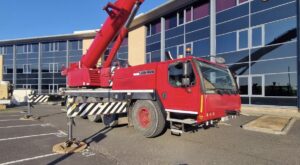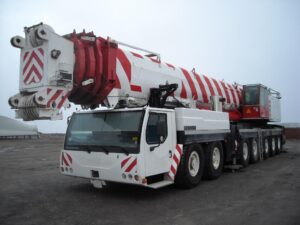
A self-propelled mobile crane cannot legally travel on the road or work in Spain unless it is properly type-approved and registered. This is one of the points where most deals get stuck — especially with imported machines — and where the most money and time is lost for not having planned ahead. This guide explains what the process involves; at KRANEX we handle it as part of the sale.
What type-approval and registration mean
It helps to separate two concepts that are often confused. Type-approval (homologación) certifies that the machine meets the technical and safety requirements demanded in the European Union so it can travel and work. Registration (matriculación) officially records it so it can move on public roads, with its documentation and its plate, in Spain or in any other EU country.
A self-propelled mobile crane is classed as a Self-Propelled Machine (Máquina Automotriz, MA), and that classification is what determines which procedure and which requirements apply to it.
A domestic crane is not the same as an imported one
The process changes a great deal depending on where the machine comes from:
Crane already registered in Spain. This is the simplest case: it is usually limited to transferring ownership, checking that the roadworthiness test (ITV) is valid and updating the documentation.
Crane imported from the European Union. Here the key is to confirm that the crane has the official documentation and records from its country of origin and that it is free of charges and liens (leasing, renting, loan collateral or retention of title).
Crane imported from outside the EU. This is the most complex case and the one where operations most often run into trouble. It requires full type-approval, on top of the customs and import side. Two situations can be distinguished:
1. The crane has NEVER been registered in an EU country. If it does not have the CE plate or marking, either there is nothing to be done — because the crane was built without meeting Community requirements — or it would be necessary to consult a company specialised in type-approvals that also has a workshop equipped to carry out the modifications needed to approve that vehicle and the crane it carries on an individual basis, which is not always possible.
2. The crane HAS been registered at some point in the EU. That makes the process easier, because it was once covered by a type-approval that can therefore be recovered. If the crane was previously registered in Spain, there is no need to type-approve the vehicle again, only to “recover the registration” it once held — although in some cases this is a rather tedious bureaucratic process, depending on the local traffic authority handling it.
Cranes from the United Kingdom deserve a separate mention. Before the 2021 Brexit they were fully approved in the EU, so mobile cranes predating that event are no more of a problem than those from other EU countries. However, if they date from 2021 or later, you need to consult the reference type-approval body to check whether it is feasible.
The process, step by step
In general terms, the path is as follows (for cranes from the EU or ever registered in a member state):
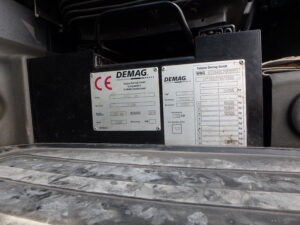
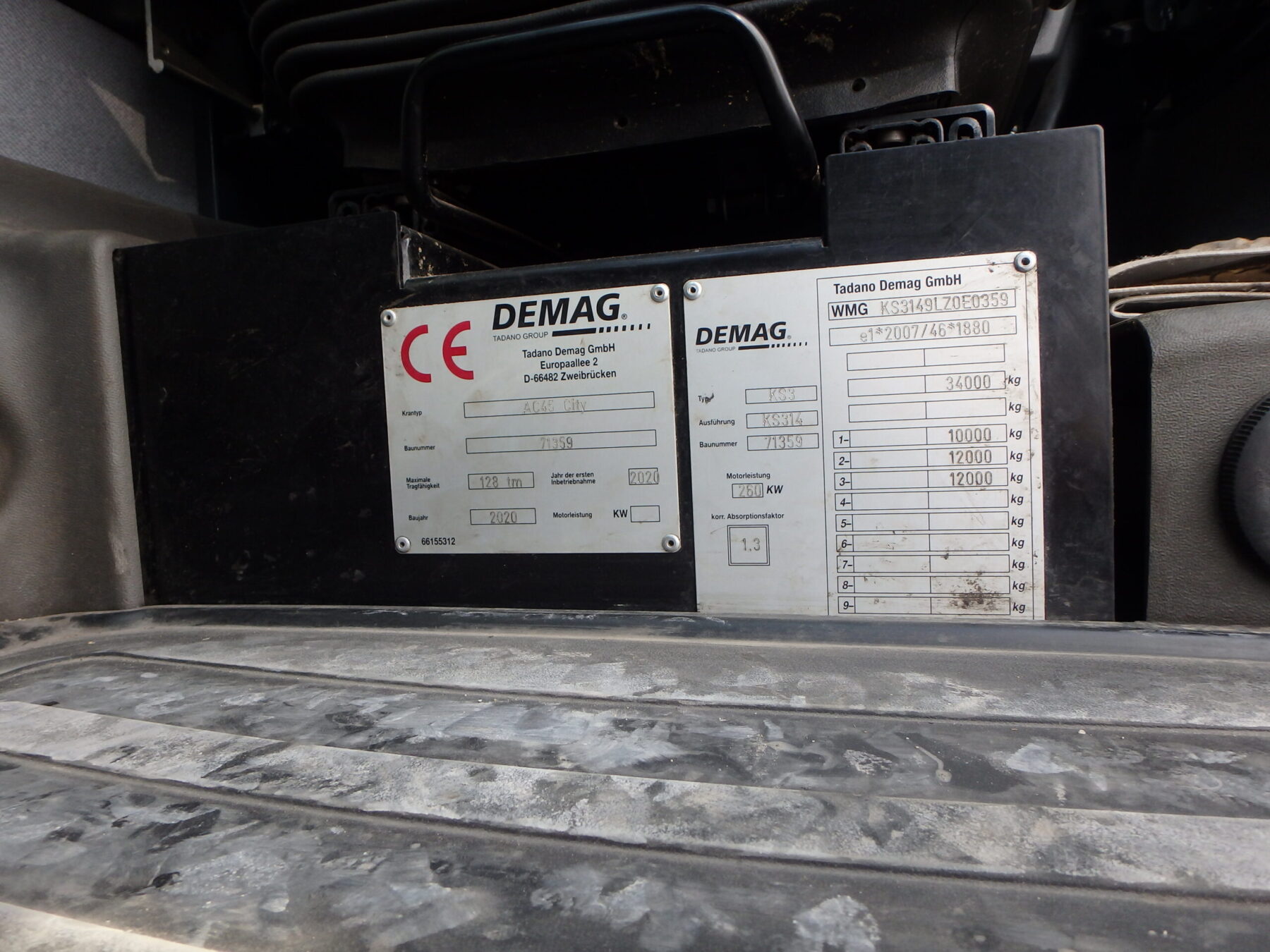
- Obtain photos of the manufacturer’s plate with the serial number and year, or the CE Certificate; the axle-weight plate, usually found in the cabs of all mobile cranes built in the EU; the engine plate is also very useful, so it is worth photographing it during the inspection stage.
- A copy of the mobile crane’s original documentation (road licence and technical sheet if applicable) from the country of origin and the CE Certificate, which the owner should hold. Likewise, a copy of the purchase invoice for the crane.
- Check that the crane is free of charges and liens in the country of origin.
- Through a specialised type-approval body, also check whether the crane already holds a COC certificate or type-approval valid for any European country, which would save all the following steps before final registration. Some newer mobile cranes from certain manufacturers already have this advantage and do not need the local approval process.
- Certificate of Regulatory Acts or Partial Approvals issued by the crane manufacturer. If the owner has it, you save the cost of issuing it locally in the destination country.
- Once in Spain, or before arrival, send all the documentation to the type-approval body, which will start the approval process, with the crane inspected at the buyer’s premises by an engineer accredited by the Ministry of Industry (usually INTA or IDIADA), as soon as possible.
- At the same time you can apply for Green Plates to be able to work and move with the crane in Spain, provisionally for two months, while the definitive approval and registration of the vehicle in Spain are processed.
- Once any issues are resolved, the documentation prepared by the type-approval body is uploaded to the Ministry’s website and you wait for its decision.
- As soon as a favourable decision is received from the relevant Ministry office, along with the official report, you can book an appointment at the local ITV station to register the imported crane.
Documentation required
A copy of the vehicle’s original documentation; the purchase invoice; the CE certificate of conformity or European type-approval; and the Certificate of Regulatory Acts (if applicable).
Roadworthiness testing (ITV) for mobile cranes
Self-propelled mobile cranes are subject to periodic technical inspection, like any other vehicle travelling on a European road.
Common mistakes and timescales
Buying the crane without inspecting it properly first, not checking whether it is free of charges, or not reviewing the available documentation.
Depending on its origin, failing to check whether it can be type-approved in Spain, based on the recommendations described above.
Not checking whether the crane already has a COC code or type-approval before starting the local approval process.
Not speeding up the inspection at the base, or not following the advice of a specialised type-approval body when local approval is required.
Frequently asked questions
Can a freshly imported, non-approved crane be driven? Yes, by using red transport plates and applying for the corresponding permit (and the reduced technical sheet) that allows it to travel between two specific points: usually the Spanish port where it arrives and either the ITV station to register it (if applicable) or the buyer’s premises.
How long does it take to type-approve and register an imported crane? Depending on the time of year, the speed of the inspection and paperwork, the complexity of any issues and the availability of all the documentation, it should take between one and two months at most.
What happens if I buy a crane without its paperwork in order? You inherit the problem: you will not be able to travel or work with it until it is regularised, with the cost and time that involves. That is why it pays to plan the type-approval before buying.
Does KRANEX handle these procedures? Yes. We can take care of managing all the necessary documentation and overseeing the type-approval process as part of the sale.