Sooner or later, every crane reaches that repair that makes you hesitate. The bill is high, the machine has been giving trouble for years and the question comes up on its own: do I fix it one more time, or is it time to replace it? It is one of the most expensive decisions a crane owner makes, and it is often settled by intuition or by attachment to a machine you know well, when it should be settled with numbers.
We are not a workshop and this article is not about how to repair a crane. It is about something we see every week as brokers: helping you decide, with sound judgement, whether a repair pays off or whether the sensible thing is to sell and move to another machine. Here is how we approach it.
First, the maintenance that saves you from having to decide
A good part of the repairs that end up in this dilemma were not inevitable: they came from maintenance that was let slide. A well-kept crane —greasing up to date, oils and filters on schedule, ropes and sheaves checked, structure and safety system inspected— not only fails less, it also holds its value better and lasts more years before the big question comes up.
Preventive maintenance is, looked at coldly, the cheapest investment there is in a crane: it costs a fraction of what a major breakdown costs and, on top of that, it protects the resale price. I develop this from the value angle in the guide to how much a used mobile crane is worth.
The breakdowns that really make you hesitate
Not all repairs weigh the same on the scales. The ones that force you to stop and do the sums tend to be these:
The hydraulic system. Pumps, cylinders and controls are the heart of the machine. A major hydraulic repair is expensive and, if the system is generally fatigued, it can be the first of several.
Ropes, sheaves and the hoist. Safety and wear items. Replacing them is within the normal; failing repeatedly points to something deeper.
The slewing ring and the telescoping and boom-luffing system. Major repairs, the kind that touch structure and heavy mechanics. Here the bills climb fast.
The engines (chassis and crane). Two engines, two possible serious breakdowns. A repair or replacement of an engine changes the equation completely.
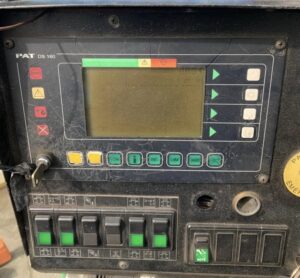
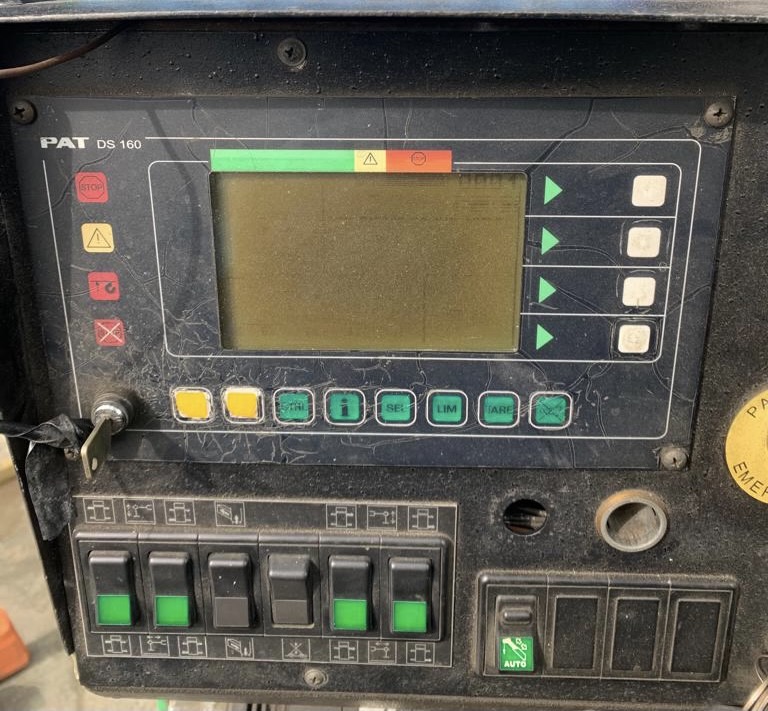
The electronics and the load moment limiter. Sensors and safety system. On more modern machines, an electronic fault can be as disabling —and as expensive to diagnose— as a mechanical one.
The factor running through all of it is the availability of spare parts. On a well-supported brand machine, a serious breakdown is a setback; on a discontinued, hard-to-supply model, the same breakdown can leave the crane idle for weeks and send the cost soaring.
The practical rule: repair-vs-replace with numbers
When people ask us, we always frame it the same way: put on one side what it costs to keep this machine, and on the other what it costs to replace it.
On the repair side, it is not just the workshop bill. You have to add the downtime —every week the crane does not work is money not coming in—, the likelihood that other faults follow this one (age, hours, general condition), and what that repair adds, or does not, to the machine value.
On the replace side, you count the price you can sell your crane for today, the cost of the replacement, and what you gain in reliability and in years of service ahead.
From that a fairly clear steer emerges. Repair when the fault is a one-off, the machine is otherwise sound, it has good paperwork and spare parts are available: it has plenty of life left and the repair returns it to production. Replace when the repair cost is out of proportion to the crane value, when several systems are at their limit, when the hours are very high for its age, or when the model no longer has a reasonable spare-parts supply. In that scenario, every repair is a short-term patch at a long-term cost.
If the sums say “replace”
Deciding to replace is not scrapping the machine: it is placing it well and making the move with judgement. The first thing is to know what your crane is really worth today —with the fault included or repaired for sale, as suits— and that is where a serious valuation comes in, like the one I explain in how much a used mobile crane is worth and in the guide to how to sell your mobile crane at the best price. If the crane is for export to a third country, it generally pays not to repair it, unless the fault prevents the crane from being moved or operated with a minimum of safety.
And the second is to choose the replacement well, looking at what really matters in a second-hand purchase —condition, hours, paperwork, type-approval—, which is exactly what I develop in how to buy a used mobile crane without surprises.
How we handle it at KRANEX
Drawing on our long experience in mobile crane trading, we have seen many machines at that decision point, and what we bring is a view with no stake in your repairing or your replacing: we give you an objective valuation of what your crane is worth, an honest take on whether that repair pays off, and —if you decide to replace— we handle both selling your machine and finding you the right replacement.
Put another way: we do not tell you what you want to hear, we give you the numbers so you decide well.
Frequently asked questions
When does repairing a mobile crane stop paying off?
As a guide, when the repair cost is out of proportion to the machine market value, when several systems are at their limit, or when the model no longer has spare parts with guarantees. At that point every fix only postpones the problem.
Does a major repair just done raise the resale value?
It helps, but it is rarely recovered in full in the price. A buyer values the machine being sound and documented more than a recent isolated bill; that is why it is sometimes better to sell before putting in a very expensive repair.
Which breakdowns are the most expensive on a mobile crane?
The ones affecting the hydraulic system, the slewing ring, the telescoping, the engines and the safety-system electronics. And, above the fault itself, what sends the cost up is a lack of spare parts and the delivery time.
Is it better to repair before selling, or sell with the fault?
It depends on the fault and the model, but above all on the crane age. Sometimes a one-off repair unlocks the sale; other times the overseas market absorbs the machine with the defect at a keen price and it is not worth the investment. You have to factor in the lower labour cost in markets for obsolete cranes. It is exactly the kind of calculation we run case by case.
Can you help me decide with no pressure to sell?
Yes. We give you the valuation and the criteria; the decision is yours. And if you choose to replace, we are with you at both ends of the deal.
Repair or replace? We help you do the sums
Tell us what machine you have and what repair you are being quoted, and we will give you a realistic valuation and a clear steer on whether it is worth fixing or making the move. And if you decide to replace, take a look at our mobile cranes for sale: many are ready to work from day one.
Talk to us and we will look at it with no obligation.